
Pest Periodical: Leaftier Caterpillars
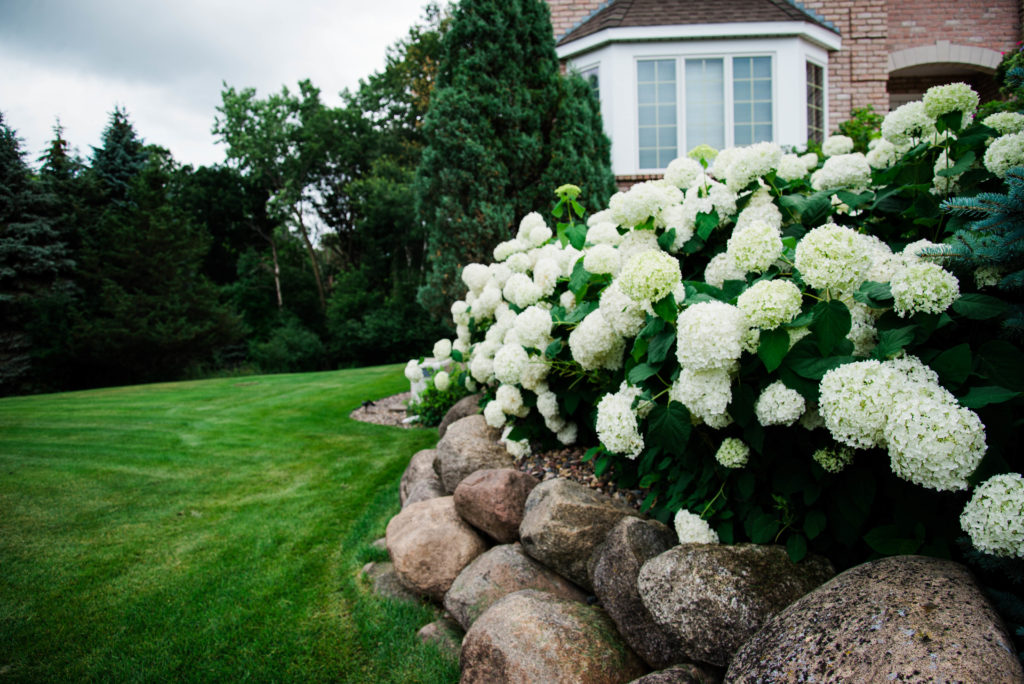
A bank of Annabelle hydrangea (Hydrangea arboresense) leafing out and budding is a lovely sight in the landscape, as these hardy shrubs slowly spread to form masses that can make quite a statement. Any time there is a mass planting of a single species of plant, there is a concern about a pest or disease that may affect that specific plant coming in and wreaking havoc. But there isn’t always a need for this concern.

In late spring, there can be some odd sights in amongst the foliage of Annabelle hydrangea as the leaftier moth caterpillars build their homes. The crinkled envelopes that the caterpillars form with silk and leaf structure serve as cocoons for them to pupate in, while they also feed on the emerging stem and leaf growth that they fold within their leaf cocoon. The caterpillar will use silk to draw together the edges of one or more newly emerged leaves, causing them to crinkle and fold inward as they continue to grow. These cocoons are moderately unsightly but do not cause significant harm to the host plant. The caterpillars will pupate and fly away as moths by the beginning of June, and they produce one generation per year, so continual damage is not an issue.
Controlling the leaftier caterpillar is simply a matter of removing and destroying the cocoons while the caterpillars are still inside. The number of cocoons in a large bank of hydrangea may be overwhelming, but the thoroughness of your handpicking is more of a matter of preference, tidiness, and reducing the overall population, as with most flying insects, the probability of eliminating them from the ecosystem is slim. Chemical applications of insecticides are not recommended as the leaf cocoon serves as a shelter from exposure to these and other environmental harms.
The presence of leaftier caterpillars is in no way a concern for the home gardener. There isn’t a large enough population of leaftier moths, and even if there were, they don’t cause significant damage to their host plants. The best method for control is to simply remove the leaf cocoons when they are spotted, and knowledge that your hydrangeas are going to be just fine.